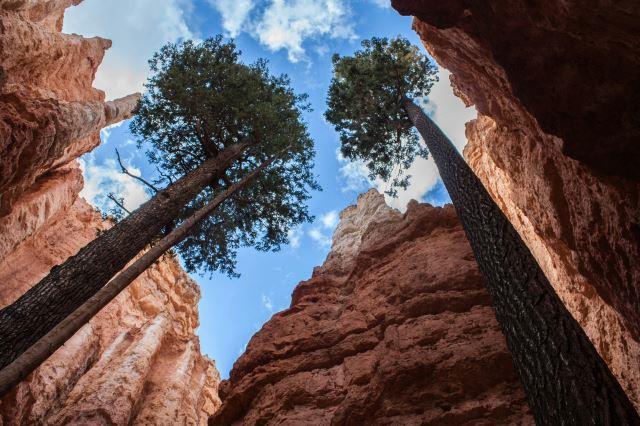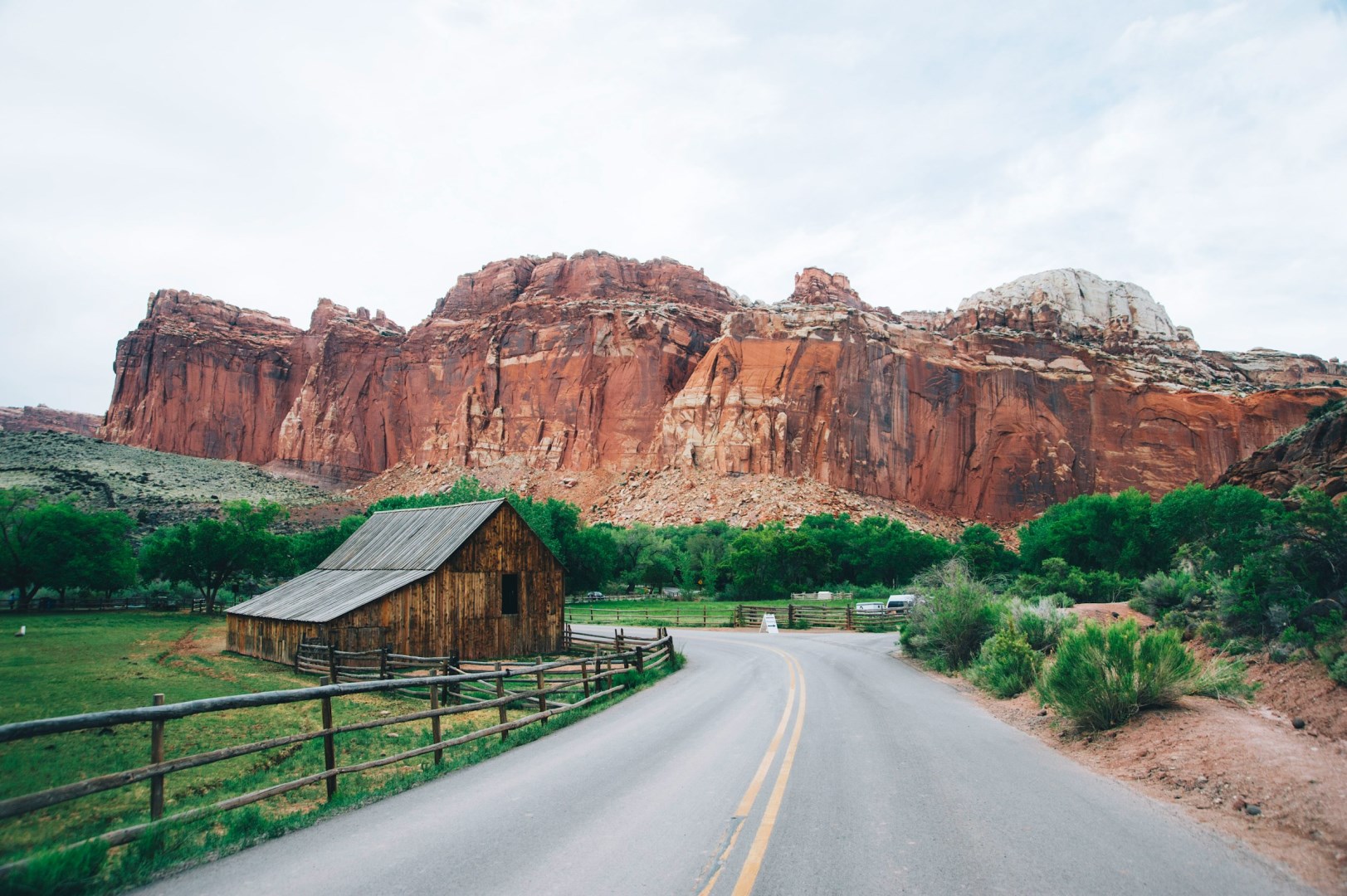
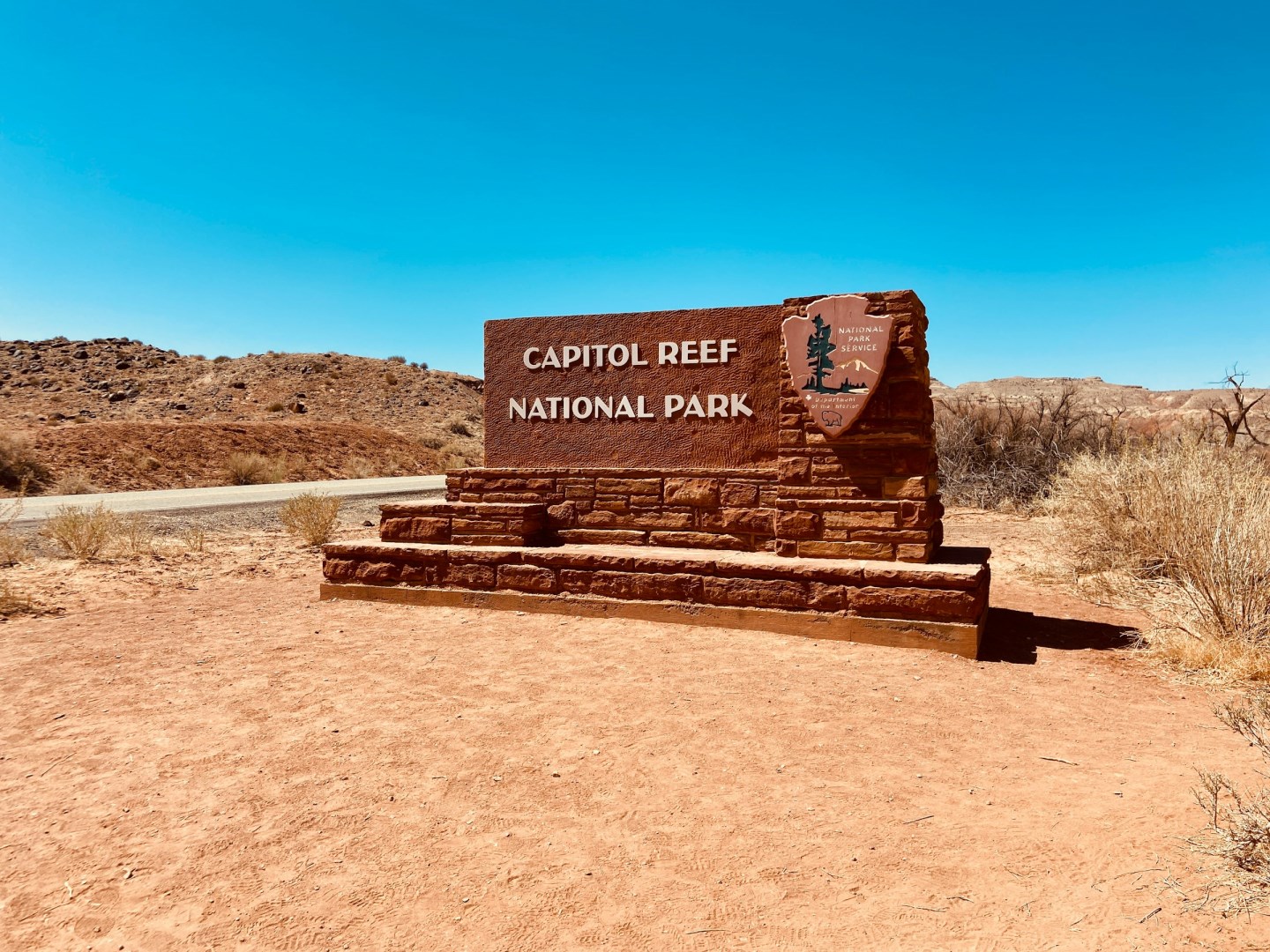
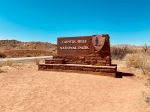
Capitol Reef National Park occupies a long, rugged section of southern Utah where sandstone cliffs, domes, canyons, and high desert plateaus form a landscape centered on the Waterpocket Fold. This immense wrinkle in the earth’s crust creates a dramatic change in elevation and exposes layers of rock in shades of red, orange, white, and gray. The Fremont River runs through a greener valley near the park’s main visitor area, contrasting with the surrounding desert. Orchards planted along the river also provide an unusual agricultural element within the otherwise arid landscape.
The area has longstanding connections to Indigenous peoples, particularly the Fremont culture and later Ute and Paiute communities. Rock art panels, including petroglyphs along the Fremont River, preserve evidence of earlier inhabitants and remain important cultural resources. Later settlers established farms and orchards in the river valley, with Fruita becoming a notable agricultural community. Historic cabins, a schoolhouse, and other structures remain near the orchards, illustrating the challenges of farming in a desert environment. The park therefore preserves both geological features and a record of human adaptation to the region.
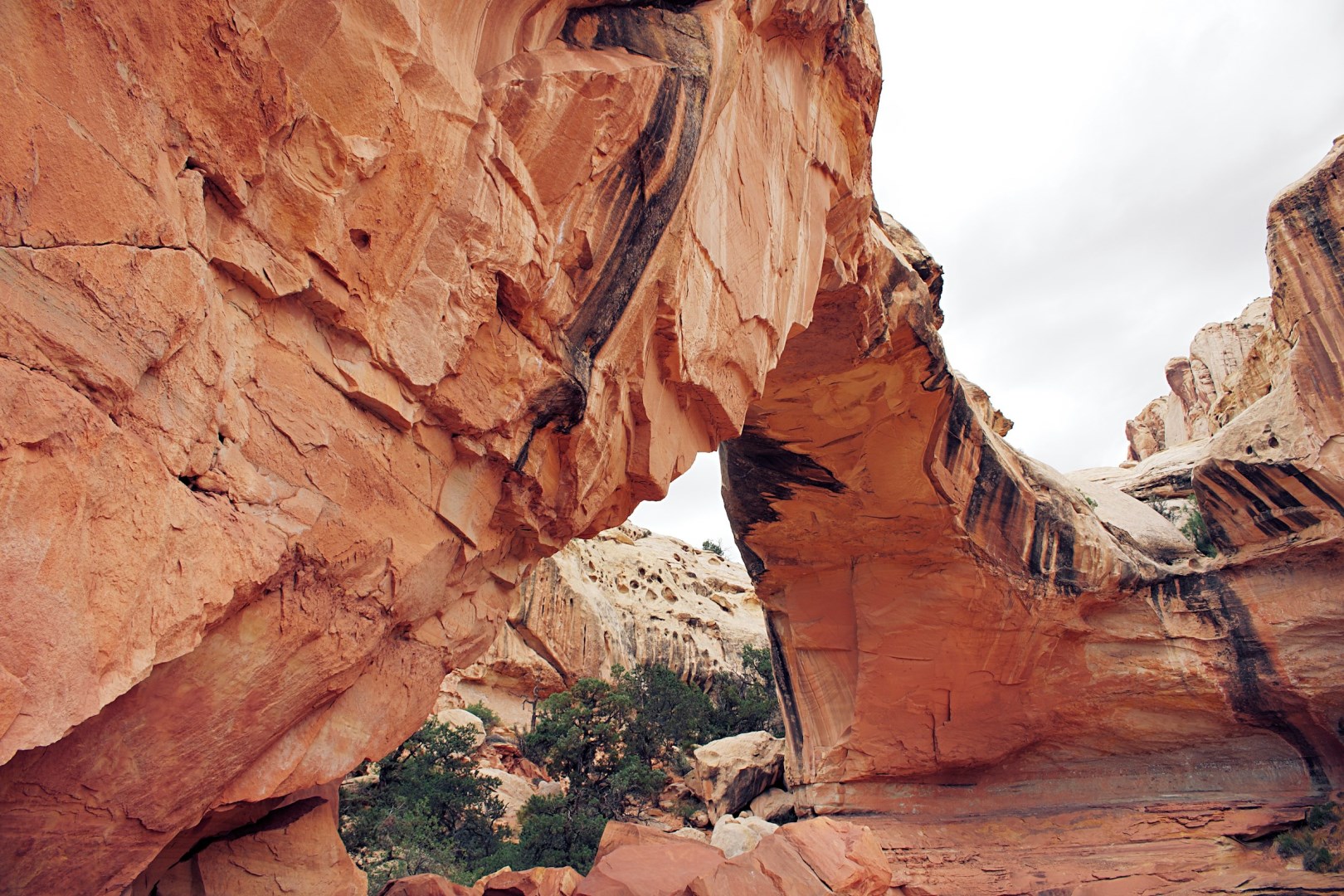
Capitol Reef contains numerous distinctive geological landmarks and outdoor routes. The Waterpocket Fold extends through the park, creating cliffs, ridges, narrow canyons, and isolated formations. Hickman Bridge is a large natural arch reached by a hiking trail, while Capitol Gorge follows a narrow canyon through towering sandstone walls. The scenic drive near Fruita provides access to viewpoints and trailheads, and Cathedral Valley contains remote formations such as the Temples of the Sun and Moon. The park’s varied elevations also support hiking, backpacking, rock climbing, scenic driving, and wildlife observation.
The orchards of Fruita are one of Capitol Reef’s most distinctive features, with apples, peaches, pears, cherries, and other fruit grown along the Fremont River. During appropriate seasons, visitors can purchase or pick fruit in designated orchards under park regulations. The surrounding desert supports mule deer, desert bighorn sheep, coyotes, jackrabbits, and numerous reptiles and birds. Another notable feature is the Fremont River’s role in sustaining vegetation and agriculture within an otherwise dry landscape. The contrast between irrigated orchards, cottonwoods, and towering sandstone formations gives the Fruita area a character unlike much of the surrounding Colorado Plateau.
Other Popular Destinations in Utah